

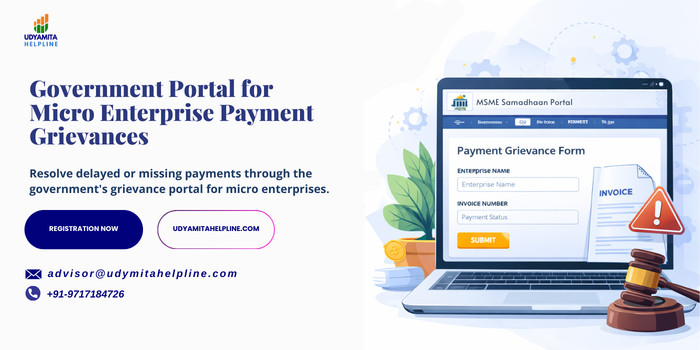
In India cash flow of micro and small businesses experiences disruption from delayed payments which results in negative effects on their working capital and hinders their daily business operations. Micro enterprises face difficulties in handling their salary payments and raw material costs and rent and other operational expenses when buyers fail to make timely payments.
The Government of India established an official payment grievance resolution mechanism through the MSME Samadhaan portal which enables eligible enterprises to file complaints about delayed payments.
Micro enterprise owners who want to collect outstanding payments need to learn about the official government portal for micro enterprise payment grievances which handles payment disputes for micro enterprises. This portal serves as a formal dispute resolution pathway which assists MSME-registered businesses in their operational requirements.
What Is The Official Government Portal For Micro Enterprise Payment Grievances?
The official government portal for micro enterprise payment grievances is commonly known as MSME Samadhaan. The Ministry of Micro Small and Medium Enterprises created this online platform to assist micro and small enterprises in filing payment dispute cases against buyers who delay their payments.
The portal provides essential support to businesses that delivered products or services yet failed to obtain payment during the established legal timeframe. The MSME Development Act 2006 enables MSMEs to access their rights through available resolution methods which the act established.
Key purpose of the Official Government Portal For Micro Enterprise Payment Grievances
The portal helps micro and small enterprises:
- File delayed payment complaints online
- Track the status of their grievance
- Access a government-backed redressal mechanism
- Seek action through the Micro and Small Enterprises Facilitation Council (MSEFC)
- Improve financial discipline among buyers and corporate entities
Ready to file your payment complaint?
Have your Udyam registration and invoice details ready. Filing takes just 5 minutes.
Why Timely Payment Matters For Micro Enterprises?
Micro enterprises usually operate with limited capital and rely heavily on regular payments for smooth functioning. Even one delayed invoice can create a chain effect across the business.
Common problems caused by delayed payments
- Working capital shortages
- Difficulty paying vendors and employees
- Reduced production capacity
- Increased borrowing and interest burden
- Stress on business sustainability and growth
For this reason, the government has created a formal grievance redressal process to protect small businesses from prolonged payment delays.
Who can use the payment grievance portal?
The portal is mainly intended for micro and small enterprises that are registered and eligible under the MSME framework. If your business has supplied goods or rendered services and the buyer has failed to make payment within the agreed or legally permitted time, you may be able to file a complaint. Eligibility generally includes
- Micro enterprises
- Small enterprises
- Businesses with valid MSME or Udyam registration
- Suppliers of goods or services facing delayed payment issues
Enterprises should ensure that their registration details, invoice records, and buyer information are accurate before filing any grievance.
You can also learn more about registration-related support on Udyam Registration and MSME Registration Assistance pages.
How The MSME Payment Grievance Process Works?
The process is designed to be simple and accessible for eligible enterprises. Once a complaint is submitted, it can be taken up for further review and dispute resolution through the competent authority.
1. Gather your business and invoice details
Before using the portal, keep the following information ready:
- Udyam Registration Number
- Business name and contact details
- Buyer’s name and address
- Invoice number and invoice date
- Amount due
- Supporting documents related to supply of goods or services
2. Visit the official grievance portal
The enterprise can access the government portal and enter all relevant complaint details carefully. Any mismatch in records may delay the process.
3. Submit the delayed payment application
After entering the required details and uploading documents, the grievance can be submitted online for review.
4. Case moves to the Facilitation Council
The matter may be examined by the Micro and Small Enterprises Facilitation Council (MSEFC) for conciliation and further action as per legal provisions.
5. Track the complaint status
Applicants can monitor the progress of their case through the portal and stay updated on developments.
Benefits of Using Government Portal For Micro Enterprise Payment Grievances
The biggest advantage of the official portal is that it provides a transparent, structured, and government-recognized route to address payment disputes. Major benefits for micro enterprises
- Online complaint filing process
- Formal legal support framework
- Better visibility of payment disputes
- Encouragement for timely buyer payments
- Protection of MSME rights
- Improved confidence for small business owners
This system helps strengthen the overall MSME ecosystem by promoting accountability and easing financial pressure on smaller businesses.
Important documents and details required
To improve the chances of smooth grievance filing, enterprises should maintain proper documentation. Incomplete records can affect the case.
Keep these documents ready
- Udyam Registration certificate
- Purchase order or work order
- Tax invoice
- Delivery proof or service completion proof
- Payment follow-up communication
- Buyer details and pending amount statement
Maintaining organized records is an important compliance habit for every small business.
Legal Support Available To MSMEs For Delayed Payments
The delayed payment grievance mechanism is supported by the provisions of the MSME Development Act, 2006, which gives legal backing to micro and small enterprises in such matters. Under the law, buyers are expected to make payment within the agreed time, and in the absence of such agreement, within the prescribed limit.
Best Practices Before Filing A Payment Grievance
Before raising a formal complaint, businesses should ensure that all communication and documentation are complete.
- Review the payment terms in the contract or invoice
- Send written reminders to the buyer
- Preserve all email and message records
- Verify invoice and supply details
- Keep your Udyam registration active and updated
These steps can make the complaint more credible and easier to process.
Conclusion
The official government portal for micro enterprise payment grievances is a valuable support system for businesses facing delayed payments. For micro and small enterprises, timely payment is not just a financial issue but a matter of business survival and growth.
Enterprises that meet eligibility requirements can use the MSME Samadhaan portal to file payment disputes through official channels while accessing legal protections that Indian MSMEs receive. Business owners need to know about MSME rules Udyam registration requirements and grievance handling procedures because this information is essential for their operations. Entrepreneurs can use udyamitahelpline.com as a resource that simplifies complex topics while directing them toward correct processing methods.
Business knowledge and compliance readiness will improve when you read about Udyam Registration advantages and MSME Certificate Download procedures and methods that small businesses use to manage payment delays.
