

Recovering pending payments can be a critical step for individuals and businesses facing delayed or unpaid dues. Whether you are dealing with a client, employer, or organization, submitting a proper payment recovery application is essential to initiate the process formally. One of the most important aspects of this process is ensuring you have all the necessary paperwork in place.
In this article, we will cover Documents for payment recovery application in a clear and structured manner, including a detailed explanation of each document.
Why Proper Documentation Matters?
Before diving into the list, it’s important to understand why documentation is crucial. Proper documents:
- Strengthen your claim
- Provide legal backing
- Help authorities or courts verify your case
- Speed up the recovery process
Incomplete or incorrect documents can delay or even weaken your application.
List of Documents for Payments Recovery Application
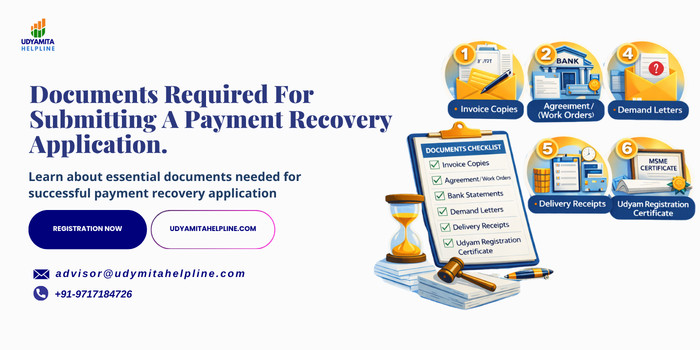
Below is a comprehensive list of essential documents required for delayed payment recovery in India:
- Application Letter for Payment Recovery
- Identity Proof of Applicant
- Address Proof
- Agreement or Contract Copy
- Invoice or Bill Copies
- Payment Records or Transaction Proof
- Communication Records
- Legal Notice Copy (if issued)
- Bank Account Details
- Authorization Letter (if applicable)
- Affidavit or Declaration
Documents Required for Filing Payments Recovery Application
Here are the complete list of elaborated documents for payment recovery application:
1. Application Letter for Payment Recovery
This is the primary document where you formally request the recovery of your pending payment. It should include details such as:
- Amount due
- Reason for non-payment
- Timeline of the transaction
- Request for action
2. Identity Proof of Applicant
Valid identity proof establishes your credibility as the claimant. Common documents include:
- Aadhaar card
- PAN card
- Passport
- Voter ID
3. Address Proof
This document confirms your place of residence or business. It can include:
- Utility bills
- Aadhaar card
- Rental agreement
4. Agreement or Contract Copy
A written agreement or contract is one of the strongest pieces of evidence. It outlines:
- Terms of payment
- Obligations of both parties
- Payment deadlines
5. Invoice or Bill Copies
Invoices serve as proof of goods or services provided. Ensure they include:
- Invoice number
- Date
- Amount payable
- Description of services/products
Stop Waiting
Recover Your Delayed Payments Instantly
6. Payment Records or Transaction Proof
These documents show whether partial payments were made or not. Examples include:
- Bank statements
- UPI transaction records
- Payment receipts
7. Communication Records
Any communication between you and the defaulter helps establish intent and follow-ups. This may include:
- Emails
- WhatsApp chats
- SMS records
- Letters
8. Legal Notice Copy (if issued)
If you have already sent a legal notice, include a copy as proof. It shows that:
- You have formally demanded payment
- The other party was notified
9. Bank Account Details
You need to provide your bank details so recovered payments can be transferred. Include:
- Account number
- IFSC code
- Bank name
10. Authorization Letter (if applicable)
If someone else is filing the application on your behalf (like a lawyer or agent), an authorization letter is required to validate their authority.
11. Affidavit or Declaration
An affidavit is a sworn statement confirming that all information provided is true. It adds legal weight to your application.
Also Read: How To File A Complaint On MSME Samadhaan Portal In India?
Conclusion
Preparing the right Documents for payments recovery application is essential for a smooth and effective recovery process. Each document plays a vital role in establishing your claim and supporting your case legally. By organizing and submitting all required paperwork correctly, you significantly increase your chances of recovering your dues quickly and efficiently.
For expert support, legal consultation, and step-by-step assistance, you can also explore services offered by Udyamita Helpline, which specializes in helping individuals and businesses with recovery and compliance processes.
FAQs
1. What is the most important document for a payment recovery application?
The most important document is the agreement or contract copy, as it clearly defines the payment terms and obligations between both parties.
2. Can I file a payment recovery application without invoices?
It is not recommended. Invoices act as primary proof of the amount due. Without them, your case may become weaker.
3. Is a legal notice mandatory before filing a recovery application?
No, it is not always mandatory, but sending a legal notice strengthens your case and shows that you made a formal attempt to recover the payment.
4. Do I need to submit original documents?
Usually, self-attested copies are sufficient. However, authorities may ask for original documents for verification if needed.
